
Computer-Guided Dental Implants in Pasadena, CA
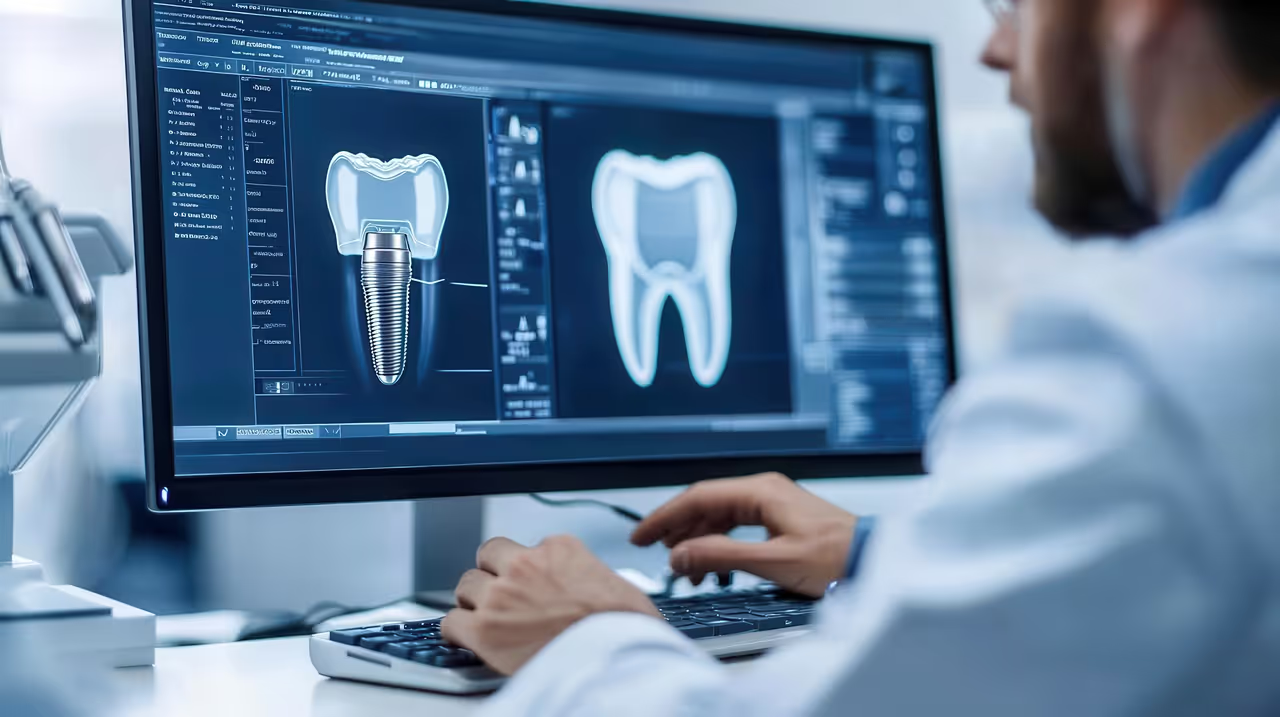
When you're considering dental implants, you want to know the procedure will go exactly as planned — that your implant will land in precisely the right position, that the process will be as comfortable as possible, and that you'll be in the hands of someone who knows what they're doing from start to finish. At Joshua Dental, Dr. Joshua Lee offers computer guided dental implants in Pasadena using in-house 3D CBCT technology, with every step of your care handled by the same doctor — no referrals, no handoffs to unfamiliar faces. You can even schedule your consultation online at your convenience.
What Is Computer-Guided Implant Placement?
Computer-guided implant placement is a modern approach to implant surgery that uses detailed 3D imaging and digital planning tools to map out exactly where your implant will be placed before a single incision is made. Rather than relying on visual estimation alone, Dr. Lee uses the digital data to create a custom surgical guide — a precisely fabricated device that directs the implant to the correct position, angle, and depth during surgery.
The result is a procedure that is more predictable, more consistent, and designed to minimize risk to the surrounding bone, nerves, and tissue.
How CBCT Scanning Makes 3D Implant Planning Possible
CBCT stands for Cone Beam Computed Tomography — a type of 3D X-ray that produces a detailed, three-dimensional image of your jaw, bone structure, and anatomy. Unlike a standard dental X-ray, which gives a flat two-dimensional picture, a CBCT scan shows Dr. Lee the full depth and density of your bone, the location of nerve canals, and any anatomical considerations that need to be accounted for before surgery.
This level of detail makes digital implant planning far more thorough than what was possible with traditional imaging alone. You can learn more about the technology Joshua Dental uses in-house on our Technology
From Digital Map to Surgical Guide: The Step-by-Step Process
Once your CBCT scan is complete, Dr. Lee uses specialized planning software to map out the ideal placement for your implant in three dimensions. Every measurement is accounted for — the angle of entry, the depth of placement, and the relationship to adjacent teeth and nerves.
From that digital plan, a custom surgical guide is fabricated. This guide fits precisely over your teeth and gums during surgery, directing the drill to the exact location planned digitally. The result is guided implant surgery in Pasadena that translates a careful digital plan into a precise physical outcome.
Why Choose Guided Implant Surgery at Joshua Dental in Pasadena?
Greater Precision, Less Guesswork
With computer-guided implant placement, the planning happens before you ever sit in the surgical chair. Dr. Lee has already mapped the optimal position for your implant using your actual anatomy — not an approximation. This means less reliance on intraoperative judgment calls and a higher level of confidence that your implant will integrate properly and support your restoration the way it should.
Reduced Surgical Trauma and Faster Recovery
Because the surgical guide directs the procedure so precisely, guided implant surgery is often less invasive than traditional freehand techniques. Smaller, more targeted incisions are typically possible, which may mean less post-operative swelling, less discomfort, and a smoother recovery. For many patients, getting back to normal life sooner is one of the most welcome benefits.
Everything In-House — No Referrals, Same Doctor Throughout
At Joshua Dental, your CBCT scan, your digital planning, and your implant surgery all happen under one roof with Dr. Lee performing every step. You won't be sent to an imaging center, a separate surgical specialist, or a different provider for any part of the process. The same doctor who reviews your scan is the one placing your implant — and that continuity makes a real difference in how informed and cared for you feel throughout your treatment. Explore the full range of implants and bone restoration we offer.
Computer-Guided vs. Traditional Implant Placement
How Guided Surgery Differs from Freehand Implant Techniques
Traditional implant placement — sometimes called freehand surgery — relies on the surgeon's skill, experience, and two-dimensional X-ray images to determine implant position during the procedure. It is a well-established technique, and experienced surgeons achieve excellent results with it. However, it does involve a greater degree of real-time decision-making, and the margin for variability is higher than with guided techniques.
Computer-guided placement shifts much of that decision-making to the planning phase, where it can be evaluated carefully and adjusted digitally before surgery begins. The surgical guide then translates that plan directly to the operating field. For patients with complex anatomy, limited bone volume, or multiple implants, this added layer of precision can be especially valuable. Learn more about dental implants to understand the full range of implant options available.
Is Digital Implant Placement Right for You?
Guided implant surgery is a strong option for most implant candidates, but it is particularly well-suited for patients who have limited bone volume, need multiple implants placed in a single session, or have anatomical considerations — such as nearby nerve canals — that require careful navigation. During your consultation, Dr. Lee will review your CBCT scan and discuss whether computer-guided placement is the recommended approach for your specific situation. If bone grafting is needed to prepare your jaw before implant placement, that will also be addressed as part of your treatment plan.
What Happens If You Delay Implant Treatment?
Bone Loss, Shifting Teeth, and Why Timing Matters
When a tooth is lost, the bone that once supported it begins to shrink — a process called resorption. This happens gradually but consistently, and the longer a gap goes untreated, the more bone volume is lost. Less bone means a more complex implant procedure, and in some cases, a bone graft becomes necessary before an implant can be placed at all.
Beyond bone loss, neighboring teeth tend to drift toward the open space over time, and the opposing tooth can begin to shift as well. What starts as a single missing tooth can evolve into a bite alignment issue, increased wear on remaining teeth, and a more involved treatment plan. Addressing implant treatment sooner rather than later helps preserve your bone, protect your surrounding teeth, and keep your options as straightforward as possible.
What to Expect: Your Guided Implant Journey at Joshua Dental
Consultation and CBCT Scan
Your journey begins with a comprehensive consultation. Dr. Lee will review your dental and medical history, discuss your goals, and take a CBCT scan to create a detailed 3D image of your jaw. This scan is painless and completed right here in our Pasadena office — no outside referrals required.
Digital Planning and Surgical Guide Fabrication
After your scan, Dr. Lee will use the 3D data to plan your implant placement digitally. You'll have the opportunity to understand the plan and ask questions before anything moves forward. Once the plan is finalized, your custom surgical guide is fabricated — a process that typically takes a few weeks.
Implant Placement Day and Recovery
On the day of your surgery, the surgical guide is placed in your mouth and the implant is positioned exactly as planned. Sedation options are available to keep you comfortable throughout. After placement, most patients experience mild soreness for a few days, which is manageable with over-the-counter or prescribed medication. Dr. Lee will provide clear post-operative instructions and remain available if you have questions during your recovery.
Frequently Asked Questions About Computer-Guided Implants in Pasadena
Question text goes here
Answer text goes here
Are computer guided dental implants more accurate than traditional surgery?
Computer-guided implant placement is designed to be significantly more precise than freehand techniques. By using a CBCT scan and a custom surgical guide, Dr. Lee can plan the exact position, angle, and depth of each implant before the procedure begins, reducing the margin for error and helping protect surrounding nerves and tissue.
Does insurance cover guided implant surgery?
Coverage for computer-guided implant surgery varies by plan. Some dental insurance policies cover a portion of implant-related procedures, while others do not. Our team can review your benefits and discuss financing options during your consultation — visit our Insurance & Financing page for more details.
How long does the planning process take before surgery?
After your CBCT scan is taken, the digital planning and surgical guide fabrication process typically takes a few weeks. Dr. Lee uses this time to map every detail of your implant placement so that surgery day is as smooth and efficient as possible.
Can I receive sedation during guided implant placement?
Yes. Joshua Dental offers IV sedation, oral conscious sedation, and general anesthesia in-house, so you can be fully at ease during your procedure. Dr. Lee will help you choose the sedation option that best fits your comfort level and medical
Ready to Schedule Your Visit?
Book Your Appointment