Implant-Supported Dentures in Pasadena, CA — A Permanent Solution
If you've been living with loose, slipping, or uncomfortable traditional dentures, you already know how much they can hold you back — from the foods you eat, to the way you speak, to the confidence you feel walking into a room. Implant supported dentures Pasadena patients ask about at Joshua Dental are designed to change that experience entirely. Anchored directly to the jawbone using titanium implant posts, implant-supported dentures deliver a level of stability and security that conventional dentures simply cannot match. Dr. Joshua Lee, DDS places all implants in-house — no referrals, no separate surgical appointments — and flexible scheduling makes it easy for new patients to get started. Browse our full Implants & Bone Restoration services to see everything available under one roof.
What Are Implant-Supported Dentures?
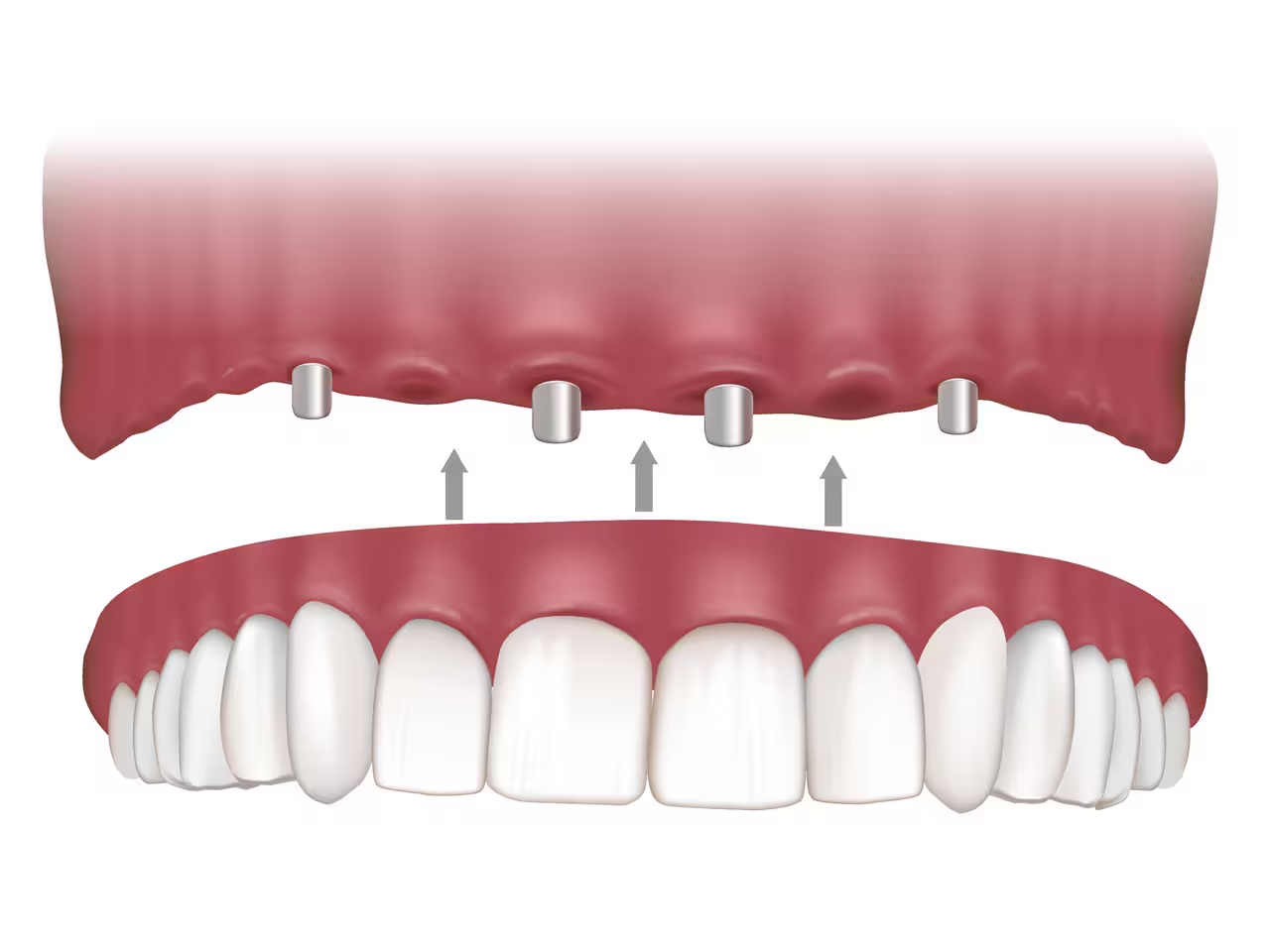
Implant-supported dentures are a tooth replacement system that combines a full-arch prosthetic with dental implants surgically placed in the jawbone. Unlike traditional dentures that rest on the gum line and rely on suction or adhesive for retention, implant dentures are held firmly in place by two or more titanium posts that fuse with the bone over time — a process called osseointegration.
The result is a restoration that functions much more like natural teeth. You can bite, chew, and speak with confidence, knowing your denture isn't going anywhere.
How They Differ from Traditional Dentures
Traditional dentures sit on top of the gums. Over time, as the jawbone naturally shrinks after tooth loss, that fit loosens further — leading to slippage, sore spots, and the need for frequent adjustments or relines. Implant-supported dentures are anchored below the gum line, which means they stay firmly in position and help slow the bone loss that makes conventional dentures progressively less comfortable.
Snap-In vs. Fixed Implant-Supported Dentures
There are two main types of implant-supported dentures, and the right choice depends on your anatomy, lifestyle, and goals.
Snap-in dentures: (also called implant-retained dentures or overdenture-style restorations) attach to the implants using locator attachments or a support bar. They can be removed by the patient for cleaning and are a popular choice for patients who want the stability of implants with the convenience of removable care.
Fixed implant dentures: (sometimes called permanent dentures) are screwed or cemented directly onto the implants and can only be removed by a dentist. They offer the closest experience to natural teeth and are not taken out at night.
Both options provide dramatically better stability than traditional dentures and help preserve the underlying jawbone.
Benefits of Implant-Supported Dentures
Stability, Bone Preservation, and Long-Term Confidence
The advantages of implant-supported dentures go well beyond comfort. Because the implant posts act as artificial tooth roots, they transmit chewing forces into the jawbone — stimulating the bone and helping prevent the resorption that accelerates after tooth loss. Patients often describe eating their favorite foods again, speaking without worry, and smiling without self-consciousness for the first time in years.
Key benefits include:
- Firm, slip-free stability — no adhesives required
- Bone preservation — implants help maintain jawbone density over time
- Improved chewing efficiency — designed to handle a wider range of foods than traditional dentures
- Natural appearance — the prosthetic is crafted to look like natural teeth and gums
- Long-term durability — implant posts are built to last for many years with proper care
Why Patients in Pasadena Choose This Over Conventional Dentures
Patients who come to Joshua Dental after struggling with conventional dentures often share a common frustration: they were told dentures were their only option, or they were referred out for implant work and the process fell apart. At Joshua Dental, Dr. Lee performs the full implant procedure in-house — from the initial scan to the final prosthetic — so patients experience consistent, relationship-driven care throughout. That continuity matters, especially for a treatment that involves multiple appointments over several months.
Are You a Candidate?
Most adults who have lost all or most of their teeth on one or both arches are potential candidates for implant-supported dentures. Good candidates generally have:
- Sufficient jawbone volume to support implant posts (or are candidates for bone grafting to build it back up)
- Healthy gum tissue
- No uncontrolled systemic conditions that could affect healing
- A commitment to maintaining good oral hygiene after treatment
The best way to find out if you qualify is a comprehensive consultation with Dr. Lee, which includes a 3D CBCT scan to evaluate your bone structure in detail.
What Happens If You Delay Replacing Missing Teeth
Waiting to address tooth loss has real consequences that go beyond appearance. When teeth are missing, the jawbone in that area no longer receives the stimulation it needs and begins to resorb — shrinking in volume and density. This process can accelerate quickly in the first year after tooth loss. As the bone shrinks, remaining teeth may shift, facial structure can change (the "sunken" look often associated with long-term denture wear), and future implant candidacy may become more complicated. Acting sooner rather than later helps preserve the bone you have and keeps more treatment options available to you.
Implant-Supported Dentures vs. Your Other Options
Implant-Supported Dentures vs. Traditional Dentures
Traditional dentures are a lower upfront-cost option and don't require surgery. However, they rest on the gums, provide no bone stimulation, and tend to become less stable over time as the jawbone changes shape. Implant-supported dentures require a surgical phase but deliver significantly better long-term stability, function, and bone health. For patients who are good surgical candidates, the difference in day-to-day quality of life is substantial.
Implant-Supported Dentures vs. All-on-4
All-on-4 implants are a fixed full-arch restoration supported by exactly four strategically angled implants. The prosthetic is permanently attached and cannot be removed by the patient. Implant-supported dentures, particularly snap-in designs, typically use fewer implants and offer a removable option — making them a good fit for patients who prefer easier home cleaning or who may not have sufficient bone for the All-on-4 approach without grafting.
Implant-Supported Dentures vs. Implant Overdentures
Implant overdentures are a closely related category — in fact, some snap-in denture designs fall under the overdenture umbrella. The distinction can be subtle and varies by provider. At Joshua Dental, Dr. Lee will walk you through exactly which design is recommended for your anatomy and goals, so you understand the reasoning behind every recommendation before any treatment begins.
What to Expect at Joshua Dental — Your Treatment Process
Consultation, Planning, and Computer-Guided Placement
Your journey begins with a thorough consultation and a 3D CBCT cone beam scan, which gives Dr. Lee a detailed, three-dimensional view of your jawbone, nerves, and surrounding anatomy. This imaging is used to plan your implant placement with precision — mapping the exact position, angle, and depth of each implant before a single incision is made. Computer-guided implant placement helps improve accuracy and can reduce surgical time and recovery.
From there, a personalized treatment plan is created and reviewed with you in full, including the number of implants needed, whether bone grafting is recommended, and what the prosthetic phase will look like.
In-House Procedure — No Referrals, Same Doctor Throughout
One of the most common frustrations patients share before coming to Joshua Dental is being referred from one provider to another — a general dentist for the prosthetic, an oral surgeon for the implants, and sometimes a third provider for bone work. That fragmented experience ends here. Dr. Lee performs every phase of your implant-supported denture treatment in-house: the surgical placement, any necessary bone preparation, and the final restoration. You see the same doctor from your first appointment to your last, and you always know exactly where you are in the process.
We also offer sedation options — including IV sedation and oral conscious sedation — for patients who feel anxious about the surgical phase. You deserve to feel at ease throughout your care, and we'll make sure you do.
For questions about coverage, visit our Insurance & Financing page to learn how we can help make treatment work for your budget.
Frequently Asked Questions About Implant-Supported Dentures in Pasadena
Question text goes here
Answer text goes here
How long do implant-supported dentures last?
The implant posts themselves are designed to last many years — often decades — with proper care and regular dental visits. The denture prosthesis attached to the implants may need adjustment or replacement over time due to normal wear. Overall, implant supported dentures Pasadena patients receive at Joshua Dental are designed as a long-term investment in oral health, not a short-term fix.
Does insurance cover implant-supported dentures?
Coverage varies by plan, and not all dental insurance policies include implant benefits. Joshua Dental works with many insurance plans, and some policies provide partial coverage for implant-related treatment. Our team will review your benefits during your consultation and help you understand your out-of-pocket costs. We also discuss financing options so that treatment is as accessible as possible. See our Insurance & Financing page for more information.
Is sedation available for the implant procedure?
Yes. Dr. Lee offers IV sedation, oral conscious sedation, and general anesthesia in-office. Patients who feel anxious about implant surgery — or who simply want to be comfortable and relaxed throughout the procedure — can receive their full treatment without being referred to a separate facility. Sedation is available for the surgical phase and is discussed in detail during your consultation.
What is the difference between snap-in and permanent implant dentures?
Snap-in dentures attach to implants using locator attachments or a bar and can be removed by the patient for cleaning — making them easy to maintain at home. Permanent (fixed) implant dentures are screwed or cemented onto the implants and can only be removed by a dentist. Both provide far greater stability than traditional dentures. The right choice depends on your bone volume, the number of implants placed, and your personal preferences — all of which Dr. Lee will discuss with you in detail before any decisions are made.
Ready to Schedule Your Visit?
If you're ready to stop managing loose dentures and start living with a smile you can rely on, implant supported dentures Pasadena at Joshua Dental may be the solution you've been looking for. Dr. Lee is accepting new patients, and online scheduling makes it simple to take the first step.